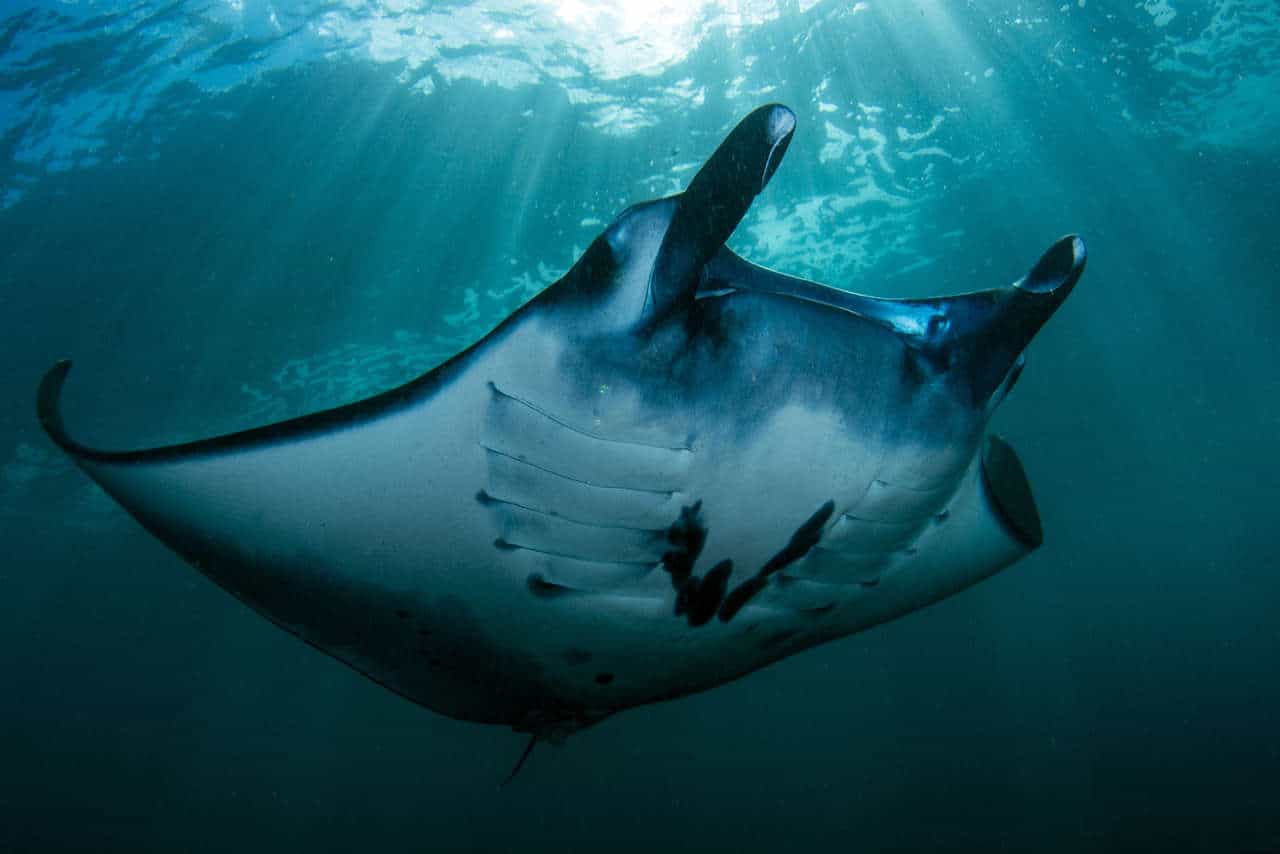
Swimming with manta rays is one of the best things you can do in Labuan Bajo. These huge, gentle rays glide over the reefs of Komodo National Park all year, and you don’t need to be a diver to see them. But some months are much better than others, and the best manta season isn’t the easiest time to be on a boat. Here’s when to go, where to see them, and how to plan it.
Quick answer Manta rays can be seen in Komodo all year, but the biggest numbers come in the wet season, roughly December to February, when plankton blooms draw them in. The dry season, from about April to October, has calmer seas and easier boat trips, and mantas are still regularly seen at Manta Point. If mantas are your main reason for the trip, go in the wet season. If you want the best all-round trip, go in the dry season.
Manta Ray Season at a Glance
Here’s how the seasons compare for mantas and for getting out on the water.
| Months | Manta chances | Sea conditions |
|---|---|---|
| December to February | Peak numbers | Rain, rougher seas |
| March to May | Good | Seas calming down |
| June to October | Regular sightings | Calm, best for boat trips |
| November | Numbers building | Rains starting |
When Is Manta Season in Komodo?
Manta rays live in Komodo’s waters year round, so there’s no month when you can’t see them. What changes is how many there are and where they gather. Most dive operators name December to February as the peak, when plankton blooms feed large groups of mantas at the cleaning stations in the centre of the park. Some put the wider season at November to April.
The catch is that this is the wet season. Seas are rougher, rain is common, and boats can be stopped for days at a time. In January 2026, the harbour authority stopped all tourist boats from sailing for just over two weeks because of high waves, from January 20 until early February. Short weather closures can happen in other months too, so if you travel in the wet season, keep a spare day or two in your plans.
From around April to October, the dry season brings calm water, sunshine, and easy crossings. Mantas are still regularly seen at Manta Point in these months, and some move to the cooler, plankton-rich waters in the south of the park. For most visitors, this is the best balance of good manta chances and good trip conditions. See our guide to the best time to visit Labuan Bajo for the full month by month picture.
Where to See Manta Rays in Komodo
Manta Point (also called Karang Makassar) is a long, shallow reef in the centre of Komodo National Park and the most reliable place to see mantas. It’s on the route of almost every day trip from Labuan Bajo, and the mantas often swim close to the surface, so snorkelers see them as well as divers. Currents here can be strong, so boats usually drop snorkelers upstream and let them drift along the reef.
Manta Alley in the south of the park is known for bigger groups of mantas, but it’s far from Labuan Bajo. The water is cooler and the currents are stronger, and it’s usually only visited on liveaboard dive trips. It suits experienced divers rather than first-time snorkelers.
Can You Snorkel With Manta Rays?
Yes. Snorkeling at Manta Point is how most visitors see mantas, and it’s included on most full-day boat tours. You’ll float on the surface while the mantas glide below, sometimes just a few metres away. Wear a life jacket or fins if you’re not a strong swimmer, as the current can carry you along quickly, and stay close to your guide and boat.
Sightings are never guaranteed. Mantas are wild animals, and visibility, tides, and weather all play a part. Your guide will usually choose the timing based on the tide and where other boats have seen mantas that day.
Divers get longer encounters, especially at cleaning stations where mantas circle in one spot. If you’re certified, book a dive day directly with a local dive shop in Labuan Bajo, which is usually better value than booking online. Our guide to scuba diving and snorkeling in Komodo National Park covers the main dive sites.
How to Swim With Manta Rays Responsibly
Manta rays are protected in Indonesia, and the way you behave in the water makes a difference.
- Never touch a manta. It damages the protective coating on their skin. Manta rays have been fully protected in Indonesia since 2014.
- Keep your distance. Stay a few metres away and let the manta come to you.
- Don’t chase or block them. Swim alongside calmly, never above or in their path.
- Avoid splashing. Slip into the water quietly from the boat.
- Follow your guide. They know the site and the current.
Tips for Seeing Manta Rays
- Plan for the weather. In the wet season, leave a spare day in case boats can’t sail.
- Go early. Morning trips usually have calmer seas and fewer boats at Manta Point.
- Bring your own mask. A mask that fits well makes snorkeling in current much easier.
- Pick a trip with Manta Point. Check the itinerary before you book, as not every tour stops there.
- Read the safety basics. Strong currents are the main risk at sea. See our travel safety tips.
See the mantas Most visitors see Manta Point on a full-day boat trip. This top-rated Komodo day tour with snorkeling includes gear and hotel pickup, and this 3 day Komodo sailing tour gives you more time in the water. Compare more options in our guide to the best Komodo island tours.